

Overview

This one-year part-time course will give you the skills and knowledge to grow your career and pursue more senior clinical supervisory and managerial roles.
Our university-accredited course is open to experienced counsellors, healthcare workers, psychotherapists, psychologists and anyone working in the social care field who is seeking career development.
A broad-based, dynamic approach
You’ll study dominant models of clinical supervision including the Seven-Eyed, Cyclical and Integrative Developmental models, as well as learn more about power, diversity and learning styles. You’ll also explore ethical, legal and professional issues that arise within the work environment, and put your research and study into practice.
Led by specialists in innovative research, supervision practice and supervisor development, this dynamic programme gives you an integrative, evidence-based understanding of clinical supervision practice. Our teaching methods include role play, analysis of recorded practice, peer and tutor feedback and independent study. You’ll also gain practical experience in class and get support to help you find external experience.
Once you graduate, you’ll have the skill set and knowledge to take your career to the next level and pursue more senior supervisory and managerial roles in the statutory, not-for-profit, community and private sectors.



DCU People
Careers & Further Options

Careers
As university-accredited supervisors, you will have a unique and in-depth portfolio of transferable knowledge and competencies to provide high standards of individual, shared, group and peer supervision in the statutory, not-for-profit, community and private sectors.
It will also help professionals gain valuable postgraduate clinical/practice education, thereby helping them to progress in their chosen career.
"DCU graduates are highly sought after by employers. Our Graduates work in environments ranging from large multinationals to SMEs, family businesses and start-ups across every sector.
DCU Careers Service has a number of learning and development initiatives in place for our students, giving them the skills they need for a successful career path."
Entry Requirements

The Professional Diploma in Clinical Supervision is designed to provide postgraduate education and training to experienced and accredited counsellors, psychotherapists, psychologists, mental health, health and social care professionals and supervisors who are seeking professional and career development.
There are two entry routes to this programme:
Applicants seeking direct entry into the Professional Diploma in Clinical Supervision must:
- Hold a minimum of a relevant undergraduate degree (Level 8 qualification/ H2.2) or equivalent (for example, though not exhaustively, psychotherapy, counselling, psychology, mental health, nursing, community development, social sciences or education);
- Have a minimum of four-years recent relevant professional experience (for example in psychotherapy, counselling, clinical/counselling psychology, mental health);
- Successfully undertake a selection interview.
OR
Recognition of Prior Learning Route
- In line with DCU policy, students who do not have the appropriate level of academic attainment for direct entry to the Professional Diploma in Clinical Supervision may gain access via the Recognition of Prior Learning process (RPL). RPL applicants will be required to demonstrate that their learning is comparable in terms of academic level training and assessment. This involves the completion of substantive written RPL documentation and production of evidence of prior learning activities such as accreditations, transcripts and/or references.
As a minimum requirement, such applicants will:
- Have accreditation from a recognised professional body in the fields of psychotherapy, counselling, clinical or counselling psychology, or mental health;
- Have a minimum of four years’ recent relevant professional experience (for example in psychotherapy, counselling, clinical/counselling psychology, guidance counselling);
- Successfully undertake a selection interview.
Standard entry procedures for international applicants and for applicants with disabilities will apply.
Programme Structure

The Professional Diploma in Clinical Supervision provides a comprehensive, university-accredited training in the dominant theoretical approaches, conceptual models and modes of clinical supervision, taking an integrative, relational and evidence-based approach to supervision practice. It comprises two modules and the indicative content is as follows:
- Theory bound approaches to clinical supervision
- Conceptual Models of clinical supervision
- Individual, shared, peer and group modes of supervision
- National and international qualitative and quantitative supervision research studies
- Integration and application of theories and models of supervision to clinical supervision practice
- Practice in individual, shared, peer and group modes of supervision
- Consideration of different contexts of supervision – private, team, organisational and e-supervision
- Development of awareness and skills in developing and maintaining healthy and productive supervisory relationships
- Reflection and practice in attending to professional issues including contracting, boundary setting, managing roles and responsibilities in supervision, and ending supervisory alliances
- Development of awareness and skills in attending to ethical and legal issues in supervision, including attention to relevant ethical codes of professional and supervisory practice
- Development of capacity in working with multicultural competence, attending to diversity and power in supervision
- Development of skills in relation to feedback, evaluation, report-writing and gate keeping in supervision practice
- Practical, professional and personal development in clinical supervision.
The programme involves 100 hours of in-class training delivered on a modular basis between September and April, in line with IACP (Irish Association for Counselling and Psychotherapy) and IAHIP (Irish Association for Humanistic and Integrative Psychotherapy) criteria for supervision training.
Students on the Professional Diploma will attend 15 days over the academic year (9.45am-5pm, Fridays and Saturdays), with a minimum 80% attendance requirement. Most class days will involve in-person attendance at the School of Nursing, Psychotherapy and Community Health, DCU Glasnevin campus, with two to three days of online/remote class attendance
Students will undertake 50 hours of supervision practice (25 hours with internal supervision practice with peers and 25 external hours of supervision practice) and attend 5 hours of external supervision consultation.
Fees and Funding

Fees
How To Apply

All Applicants must submit:
All Applicants must apply through DCU's Student Application Portal which is available here. Here's a quick step by step guide if you need help with your application.
- Academic transcripts for each and every year of study (with English translation where applicable) or RPL candidates must submit a cover letter affirming their intent to apply for RPL along with evidence of previous training, transcripts and accreditations.
- Personal statement (300 words) outlining interest in undertaking the Professional Diploma in clinical supervision
- Two references, Academic Reference and Professional Reference. Please see student application portal.
- If applicable, provide evidence of competence in the English language as per DCU entry requirements. Please see link http://www.dcu.ie/registry/english.shtml.
Those direct entry applicants, who successfully complete the paper application stage, will be invited for interview.
Due to the specialist nature of this programme, additional criteria may be used to assess suitability to undertake this programme. For further information, please contact the Programme Chair using the contact details above.
Recognition of Prior Learning
For those applicants who do not directly meet the entry criteria, a Recognition of Prior Learning (RPL) Board assesses applications for equivalent prior learning regarding academic/ training achievements and clinical/ practical experience. This Board comprises members of the Programme Admissions Panel.
After an application has been made on the Postgraduate Application System those applicants, applying through the RPL route will be invited to complete a portfolio of evidence that is presented for consideration by the RPL board for entry to the Professional Diploma in Clinical Supervision.
Those RPL applicants, who successfully complete the paper application stage, will be invited for interview.
Application Deadlines
Applications will be accepted on a rolling basis until the programme is full or until:
- Closing date for EU applicants is 30th May 2025
-
Closing date for Non-EU applicants was 30th May 2025.
Please note if you are a non EU student and require a study visa, you are not eligible to apply for part-time programmes as study visas are only granted for full-time programmes.
All entry requirements should be met before the commencement of the programme.
Application Queries
For EU applicant queries, please visit https://www.dcu.ie/registry/eu-postgraduate-taught-admissions or email postgraduateadmissions@dcu.ie
For non EU applicant queries, please visit https://www.dcu.ie/registry/international-admissions-undergraduate-and-postgraduate or email internationaladmissions@dcu.ie
Commencement of Programme
The programme commences in September 2025.
Life On Campus

At DCU, our students can expect a unique campus experience. We are known for our excellent teaching and learning facilities, our active clubs and societies, and our great social and sporting facilities. All this makes DCU an exciting place to be.
DCU has three academic campuses; Glasnevin, St. Patrick’s and All Hallows (both in Drumcondra), all close to Dublin City centre.
They can be reached by public transport, Dublin Bus and Bus Éireann, with our Drumcondra campuses a ten minute walk from Drumcondra Train Station. Glasnevin is a 20 minute walk from St Patrick’s and All Hallows. They are also linked by Dublin Bus.
Each campus has a library (O’Reilly, Cregan and Woodlock Hall), study spaces, restaurants, and on-campus residencies. There are sports facilities on Glasnevin and St. Patrick’s, and there is a dedicated sports campus, St Claire’s, located near Glasnevin on the Ballymun Road.
DCU’s 19,000 students have access to exceptional teaching and learning facilities across our three academic campuses.
These include modern learning theatres, research centres, a new media and TV studio, radio/podcast studios, computer suites and advanced labs in the areas of Languages, Engineering, Physics, Chemistry and Biotechnology, as well as a Sports Performance centre and a training hospital ward. In 2021, we opened our first virtual reality ‘Leadership Lab’, which is located in our Business School.
We continue to improve and update our facilities. For example, construction of a new world-class STEM facility is underway on the Glasnevin campus. With capacity for an extra 3,000 STEM students, this facility will advance DCU’s international reputation for excellence in science and health, computing and engineering disciplines.
Studying in DCU isn’t just about course work. The university is rich in student life and activities.
There are more than 140 clubs and societies for students in DCU, with ‘Clubs & Socs’ days taking place on both the Glasnevin and Drumcondra campuses at the start of the academic year. They span everything from rugby to rock climbing, anime to jazz.
For many students, sport is an important part of the DCU experience. DCU’s Sports Complex boasts a 25 metre swimming pool, fitness centre gym, all-weather pitches and squash courts, as well as soccer, GAA and rugby pitches. DCU Dóchas Éireann, the university’s GAA club, is the largest third level Gaelic Games club in the country. Meanwhile, DCU Athletics has been Ireland’s highest achieving university club for many years. And DCU has dozens of other clubs to get involved in, from Archery to Weightlifting.
The Glasnevin campus is home to our purpose built, state-of-the-art student centre, The U, which serves the needs of a rapidly growing student body. Here, you will find the Student Leadership and Lifeskills Centre, performing arts and cultural spaces for students and the wider community, and the Entrepreneurship and Innovation Hub. Also located on our Glasnevin campus is The Helix, our renowned performing arts centre.
On our St Patrick’s campus, we have the Java Student Hub, a vibrant, warm and welcoming space where students can meet for coffee, play music, use the projector to watch events, or just relax. The walls of the Java Hub were designed based on the cultural history of St Patrick’s Campus, including the special references to the notable sporting history and history of the arts.
We have a number of academic, professional and social supports for students.
Student Advice & Learning Skills Centre - Offers a wide range of supports and services to students and advice
The Writing Centre - drop-in writing workshops for students through the academic year
Maths Learning Centre - provides maths support for students of all ability levels with maths modules
Student Learning - facilitate the transition from passive to active learning for students at DCU, by teaching study skills, nurturing critical thinking and building student confidence.
Careers work with students to help them on their professional journey into graduate employment.
Our student support team offers a comprehensive support programme, helping students make that all important transition into university life and focusing on building confidence and skills which are key to success at third level.
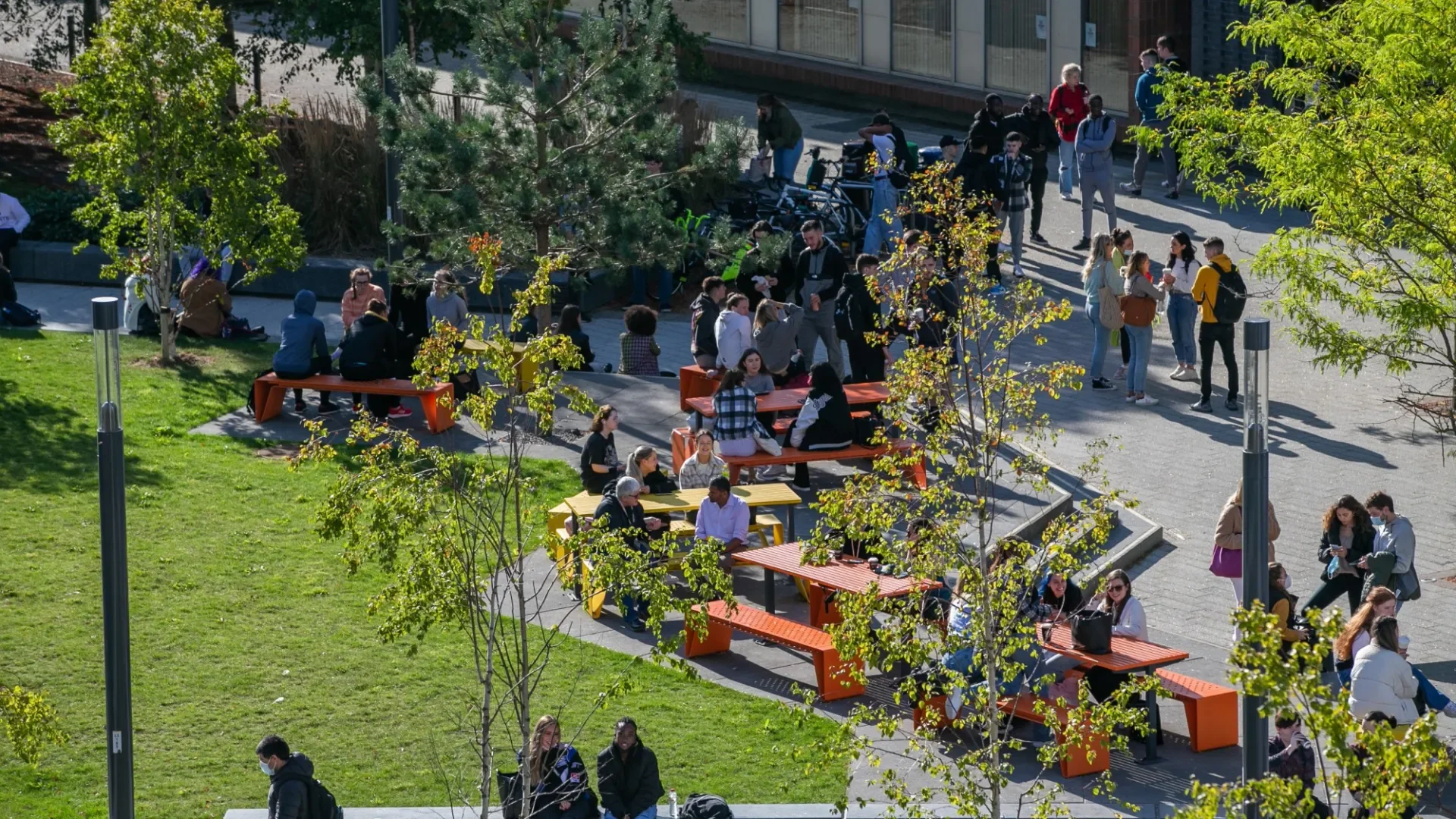
DCU Glasnevin Campus
FAQs

Is DCU all one campus?
DCU is a multi campus university - the Glasnevin, St Patrick's and All Hallows campuses. The St Patrick's campus is where the Education courses are taught and some of the subjects from the BA Joint Honours degree. There is a 20-25 minute walk between the campuses but there are buses and bikes available to go between them also.
Click here to see maps of all of our campuses
If I'm studying on the St Patrick's campus, can I use the library and sports centre on the Glasnevin campus?
Yes, all facilities such as sports and accommodation are open for all DCU students to avail of.
Are there libraries in DCU and if they have wifi and work stations?
We have a brand new state of the art four floor library on our St. Patrick's Campus which complements the existing library on the Glasnevin campus. There is free wifi, work stations as well as desktop computers.
Does DCU provide accommodation?
DCU does have on-campus accommodation for undergraduate and postgraduate students, and you can find out more and apply via the Accommodation Office webpage.