
DCU Futures
Reimagining undergraduate education for an unscripted world
DCU Futures is the most ambitious innovation in teaching and learning in the history of Dublin City University (DCU). Operating as a blueprint for the University and funded by the Human Capital Initiative, this €19.9 million project is an unprecedented commitment to radically re-imagine undergraduate education for the 21st century to meet the challenge of empowering students to be future-capable and thrive in an increasingly unscripted world defined by volatility, uncertainty, complexity, and ambiguity.
The objectives of DCU Futures are to:
- Prepare students to thrive in an unscripted world defined by unprecedented technological and social change
- Adopt innovative pedagogic methods that can best equip our students for an uncertain world
- Confirm DCU’s status as a leading and competitive educational institution, embracing our value system by seeking to transforms lives and society.
The initiative aims to create capacity for over 1,000 additional students. It is funded under Pillar 3 of the Human Capital Initiative (HCI) until December 2024.
For details about DCU Futures please see below.
You may also access a PDF of the DCU Futures printed brochure here
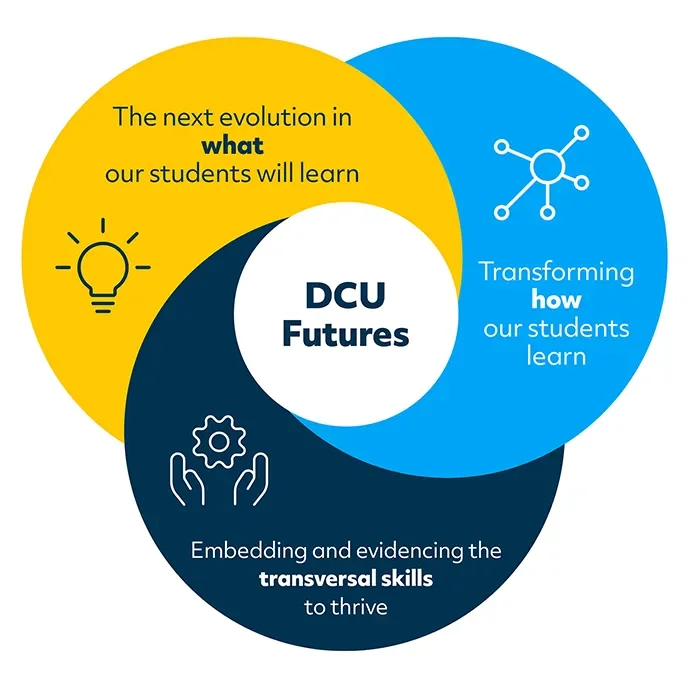
DCU Futures is structured around three pillars – what students learn, how students learn, and embedding the transversal skills for our students to thrive.
To find out more click on the following links:
The next evolution in what our students will learn
The DCU Futures Evaluation examines the educational and institutional outcomes of Futures, complementing evaluations of milestones and deliverables by Futures’ funders. Unlike the external evaluation, the Futures Evaluation is a DCU-owned and DCU-led initiative. Based in the Centre for Evaluation, Quality & Inspection (EQI), and the Institute of Education, the evaluation uses a participatory model of evaluation. Key stakeholders within DCU, including staff and students involved in Futures programmes, will help to define target outcomes. The evaluation will examine the overall Futures model for sustainability and scalability, with a series of recommendations provided to the institution.
For all enquiries please email us at HCI3@dcu.ie
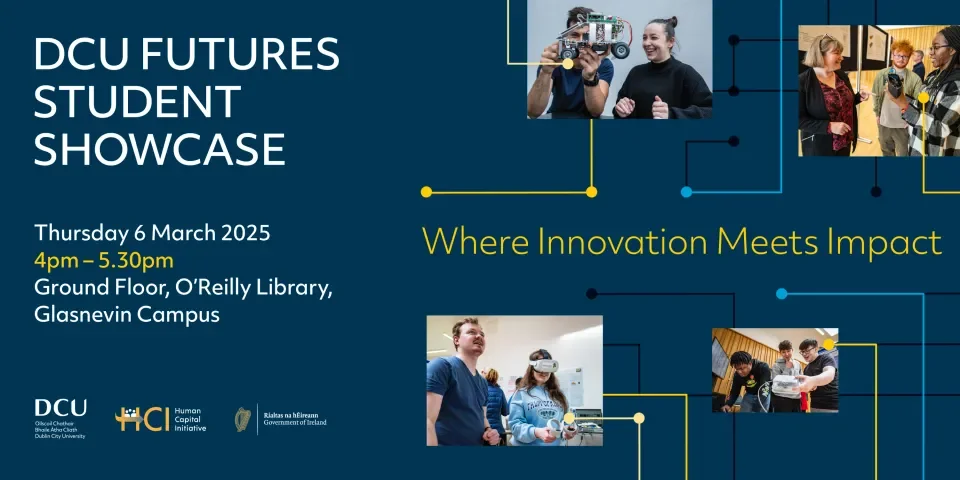
DCU Futures Student Showcase - Where Innovation Meets Impact
Date: March 6th, 2025 Time: 4:00 PM - 5:30 PM Location: Ground Floor, O'Reilly Library, Glasnevin Campus
The DCU Futures Student Showcase is an exhibition that enables DCU Futures students to showcase innovative learnings from their course. Now in its third year, the showcase celebrates students’ learning in a variety of exhibition formats - such as posters, interactive displays and demonstrations of student projects, and innovative assessments such as video and podcasts.
View the Showcase page and register here
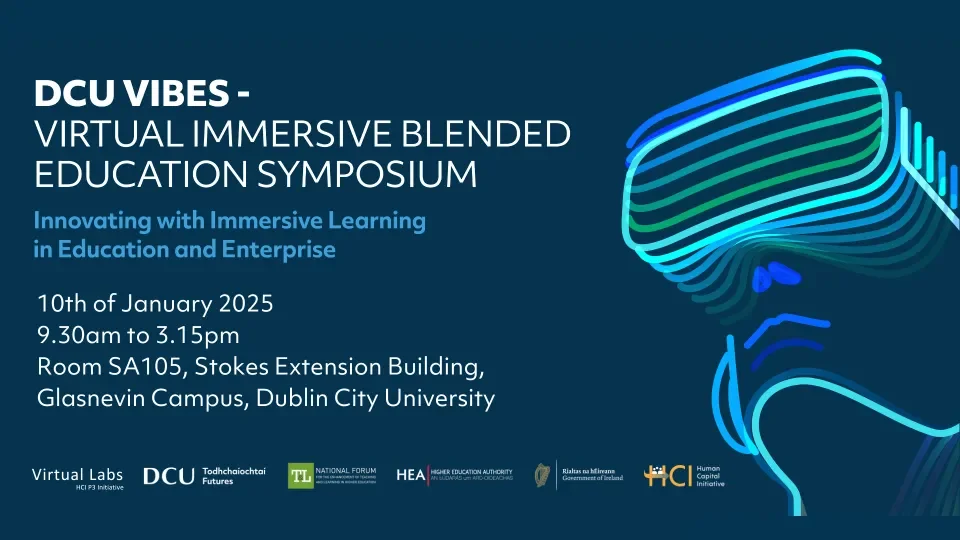
The inaugural DCU VIBES—Virtual Immersive Blended Education Symposium—will take place on January 10, 2025, in the Stokes Building, Glasnevin Campus, DCU.
The symposium will bring together thought leaders across education and policy to examine and collaborate on the future of immersive learning in education and training.