
Overview

If you have a passion for languages and you are interested in exploring the field of translation, this degree course is for you.
Open up global career opportunities
The BA in Applied Language and Translation Studies (ALTS) is a unique degree that aims to prepare a new generation of translators and language professionals for global career opportunities. You will study two foreign languages with exciting combinations that include Chinese, French, German, Japanese and Spanish. Plus this dynamic degree allows you to explore the principles behind language, culture, translation and intercultural communication.
Linguist and translator skills
You will acquire professional and academic competencies as a linguist and a translator, allowing you to compete in the national and international marketplace. You will also acquire significant technical skills as you work with multimedia texts and a variety of software applications used by translators, and develop critical and creative thinking skills.
Taught by leading experts for 30 years
DCU is ranked joint number one in Ireland for Linguistics and with the ALTS degree, you will gain top-quality language, translation and intercultural skills from the top experts in the field of linguistics and translation. You can complete the ALTS degree in three years, or choose to take an extra year either to study abroad or complete an INTRA placement.



DCU People

I am Patrick Cadwell and I teach on the DC155 BA in Applied Language and Translation Studies.
Read more about Patrick Cadwell
Careers & Further Options

Careers
Graduates from our degree in Applied Language and Translation Studies are immediately work-ready and sought after for their professional competencies as language professionals and translators.
Many of our graduates have found employment across a range of industries where they have applied their language skills, including localisation, gaming, banking, tourism, education, research and recruitment.
Additionally, Ireland’s technology sector has been dubbed the ‘Silicon Valley of Europe’ and a source of great opportunity for graduates with foreign languages working in sales, marketing and customer solutions. Graduates have also secured positions with international organisations including the United Nations, European Parliament and European Commission and in the not-for-profit sector.
- Translator
- Interpreter
- Mediator between cultural groups
- Editor
- Terminologist
- Educator
- Researcher
- Marketer
- Sales manager
- Diplomat
- Journalist
- Logistics manager
- International development worker
DCU graduates are highly sought after by employers. Our Graduates work in environments ranging from large multinationals to SMEs, family businesses and start-ups across every sector.
DCU Careers Service has a number of learning and development initiatives in place for our students, giving them the skills they need for a successful career path.
Entry Requirements

In addition to the general entry requirements for admission to the university the following entry requirements apply
Minimum of H4 in French or German or Spanish
In addition to the general entry requirements for admission to the university the following entry requirements apply
GCE A Level C French or German or Spanish
Please visit our Admissions webpage for details on course requirements or how to apply to DCU.
Please visit our QQI FET webpage for details on DCU courses, open days, campus tours or school visits.
To apply to DCU, please visit www.cao.ie.
Mature entry is a competitive process. Applicants must demonstrate:
- a genuine interest in the programme(s) they are applying for
- academic experience and competency in their chosen field of study
- an ability to engage and succeed on the programme
All applicants must complete a statement of interest to be considered for the mature application route.
For further guidance on the mature application process please see the CAO Website
Additional Requirements
This programme requires evidence of competency in French, German or Spanish. The requirement for the chosen language should equate to an Irish Leaving Certificate H4 in this subject. This requirement is essential for this programme. Applicants can show their strength in this through formal examinations e.g. school leaving examinations, QQI-FET, access programmes or other third level qualifications. If applicants do not have any relevant examinations, they may be able to meet the requirements through their work and life experience, applicants must give examples of this experience to demonstrate their competency in these areas in their personal statement. In this instance applicants may be requested to supply additional information or/and attend an interview to establish language proficiency
Applicants that have completed at least one year of study at NFQ Level 6, 7 or 8 at another institution may apply to continue their studies on a similar programme at DCU. There should be substantial overlap in content between the two programmes to be considered for a transfer. Results and other supporting documentation must be submitted to CAO by the closing date of 1st July. This is a competitive application process for a small quota of advanced entry places. Offers are made on a rolling basis until all places are filled. Early application is advised. Please note: Applicants should also consider applying through the appropriate route for first year entry to the programme they are interested in. This application process is only for advanced entry.
Additional Criteria
Applications are welcomed to Year 2 from students who have studied at Level 6, 7 or 8 in relevant areas. Applications will only be considered in cases where the applicant has studied two of the five languages taught on ALTS in an appropriate combination (two European languages or one European plus one Asian language) at Level 6, 7 or 8 in the year of application. To assess their language level, applicants may be required to participate in an interview with SALIS lecturers.
International candidates are expected to have educational qualifications of a standard equivalent to those outlined above. In addition, where such candidates are non-native speakers of the English language they must satisfy the university of their competency in the English language. For further information on international applications click here.
Course Structure

In the first year of this degree, you will select two languages from Chinese, French, German, Japanese and Spanish and study foundation modules in linguistics, culture and translation studies. In your second year, you can choose to take either two intermediate languages, or one intermediate and one beginner-level language. For the final year of your degree, you have the option to continue studying two languages or to just focus on one of them.
Beginner or intermediate level
Please note that Chinese and Japanese are offered at beginner level only. French is offered at intermediate level only. German and Spanish can be taken at either intermediate or beginner levels.
Year Abroad
Studying abroad at one of our partner universities provides a wonderful opportunity to experience the culture of another country and greatly enhances your language skills. If you choose to study abroad for your fourth and final year, your studies in Year 3 will provide you with a strong foundation to make the most of your time abroad, as you will conduct independent research for your dissertation and take courses in languages and translation.
INTRA
Alternatively in Year 4, you may opt to apply for a year-long work placement. This will give you a unique opportunity to enhance your CV, increase your employability and experience the relevance of your study in the real world. This option is competitive and subject to the availability of placements. For more information on the INTRA programme at DCU, visit their section.
What Will I Study?
While content of the course may change over time, these modules are indicative of what you will be studying in each year.
- Two intermediate languages or one beginner and one intermediate language
- In addition to the two languages, all students choose from the following:
- Introduction to Translation Studies
- Introduction to the Study of Language
- Chinese/French/German/Japanese/Spanish Society and Literature
- Two intermediate languages or one beginner and one intermediate language
- In addition to the two languages, all students choose from the following:
- Textual Studies
- Chinese/French/German/Japanese/Spanish Literature and Film
- Chinese/French/German/Japanese/Spanish Translation Practice
- Introduction to Terminology
- Computer-Aided Translation
- Continue with your two chosen languages or focus on one
- Dissertation (independent research)
- Multimedia Translation
- Introduction to Interpreting
- Chinese/French/German/Japanese/Spanish Advanced Oral and Writing Skills
- Chinese/French/German/Japanese/Spanish Economic Translation Chinese/French/German/Japanese/Spanish Scientific/Technical Translation
You have the option to graduate with a degree after completing Year 3 of this course*
Year abroad at a partner university*
- Follow the partner university’s academic courses
OR
* Students need to fulfil criteria in order to participate in the year-long study abroad or INTRA programme.
Fees and Funding

Fees
How To Apply

Applicants presenting EU School Leaving/FETAC Level 5 examinations: Apply through the Central Applications Office (CAO) by 1st February or 1st May
To apply for this programme:
Candidates should apply directly here. Here's a quick step by step guide if you need help with your application.
Please provide
- Academic Transcripts for each and every year of study with English translation, if applicable.
- If applicable, provide evidence of competence in the English language as per DCU entry requirements.
Applications are accepted on an ongoing basis up to 1st July. All Non-EU candidates are advised to apply early, as places are limited.
All mature applicants apply through the CAO by 1st February. For further information and for special application procedures for mature students, please click here
Applications are made via the CAO Advanced Entry route which will open on the 5th November to 1st July.
Please see Application Procedures or E-mail ugadmissions@dcu.ie.
Candidates submitting EU examination results are required to apply through the CAO at https://www.cao.ie/.
Candidates submitting non-EU examination results are required to apply directly here.
A minimum of 10 students is required for Chinese.
Life On Campus

This is a unique creative space on campus for all language-loving students! You can
- use your target language in an authentic intercultural atmosphere
- share and get to know each other´s languages and cultures
- get to know fellow students from different linguistic and cultural backgrounds
- share your curiosity/passion for new cultures and languages
Language Societies
As a language student at DCU you may want to join a number of clubs or societies to meet other like-minded students such as the Chinese Society, German Society, Japanese Society, French Society and Erasmus Student Network, to name a few.
At DCU, our students can expect a unique campus experience. We are known for our excellent teaching and learning facilities, our active clubs and societies, and our great social and sporting facilities. All this makes DCU an exciting place to be.
DCU has three academic campuses; Glasnevin, St. Patrick’s and All Hallows (both in Drumcondra), all close to Dublin City centre.
They can be reached by public transport, Dublin Bus and Bus Éireann, with our Drumcondra campuses a ten minute walk from Drumcondra Train Station. Glasnevin is a 20 minute walk from St Patrick’s and All Hallows. They are also linked by Dublin Bus.
Each campus has a library (O’Reilly, Cregan and Woodlock Hall), study spaces, restaurants, and on-campus residencies. There are sports facilities on Glasnevin and St. Patrick’s, and there is a dedicated sports campus, St Claire’s, located near Glasnevin on the Ballymun Road.
DCU’s 19,000 students have access to exceptional teaching and learning facilities across our three academic campuses.
These include modern learning theatres, research centres, a new media and TV studio, radio/podcast studios, computer suites and advanced labs in the areas of Languages, Engineering, Physics, Chemistry and Biotechnology, as well as a Sports Performance centre and a training hospital ward. In 2021, we opened our first virtual reality ‘Leadership Lab’, which is located in our Business School.
We continue to improve and update our facilities. For example, construction of a new world-class STEM facility is underway on the Glasnevin campus. With capacity for an extra 3,000 STEM students, this facility will advance DCU’s international reputation for excellence in science and health, computing and engineering disciplines.
Studying in DCU isn’t just about course work. The university is rich in student life and activities.
There are more than 140 clubs and societies for students in DCU, with ‘Clubs & Socs’ days taking place on both the Glasnevin and Drumcondra campuses at the start of the academic year. They span everything from rugby to rock climbing, anime to jazz.
For many students, sport is an important part of the DCU experience. DCU’s Sports Complex boasts a 25 metre swimming pool, fitness centre gym, all-weather pitches and squash courts, as well as soccer, GAA and rugby pitches. DCU Dóchas Éireann, the university’s GAA club, is the largest third level Gaelic Games club in the country. Meanwhile, DCU Athletics has been Ireland’s highest achieving university club for many years. And DCU has dozens of other clubs to get involved in, from Archery to Weightlifting.
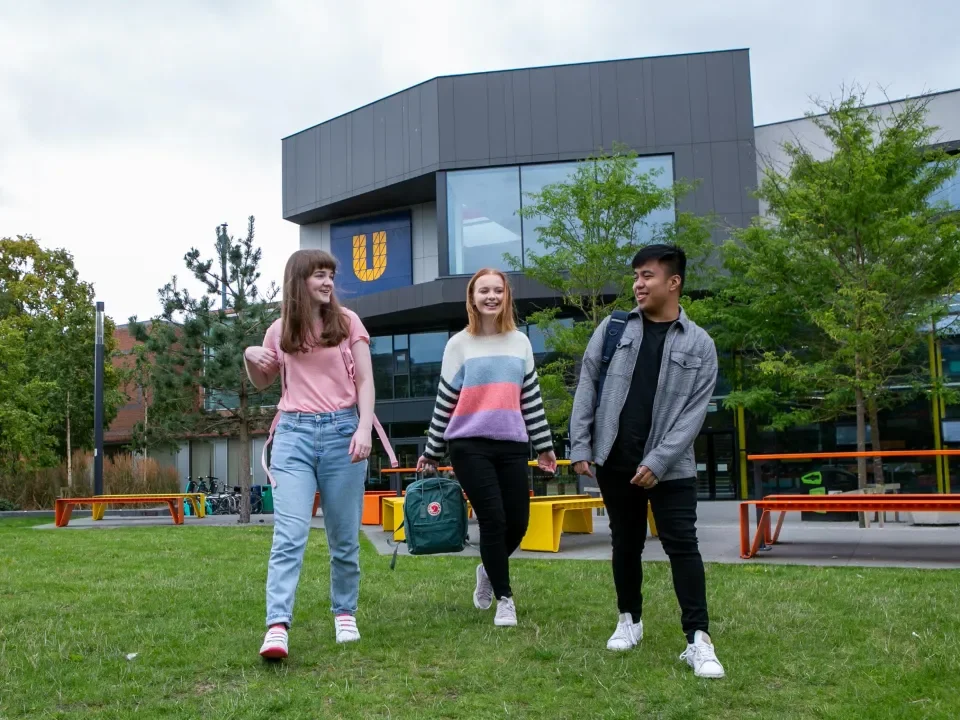
The Glasnevin campus is home to our purpose built, state-of-the-art student centre, The U, which serves the needs of a rapidly growing student body. Here, you will find the Student Leadership and Lifeskills Centre, performing arts and cultural spaces for students and the wider community, and the Entrepreneurship and Innovation Hub. Also located on our Glasnevin campus is The Helix, our renowned performing arts centre.
On our St Patrick’s campus, we have the Java Student Hub, a vibrant, warm and welcoming space where students can meet for coffee, play music, use the projector to watch events, or just relax. The walls of the Java Hub were designed based on the cultural history of St Patrick’s Campus, including the special references to the notable sporting history and history of the arts.
We have a number of academic, professional and social supports for students.
Student Advice & Learning Skills Centre - Offers a wide range of supports and services to students and advice
The Writing Centre - drop-in writing workshops for students through the academic year
Maths Learning Centre - provides maths support for students of all ability levels with maths modules
Student Learning - facilitate the transition from passive to active learning for students at DCU, by teaching study skills, nurturing critical thinking and building student confidence.
Careers work with students to help them on their professional journey into graduate employment.
Our student support team offers a comprehensive support programme, helping students make that all important transition into university life and focusing on building confidence and skills which are key to success at third level.
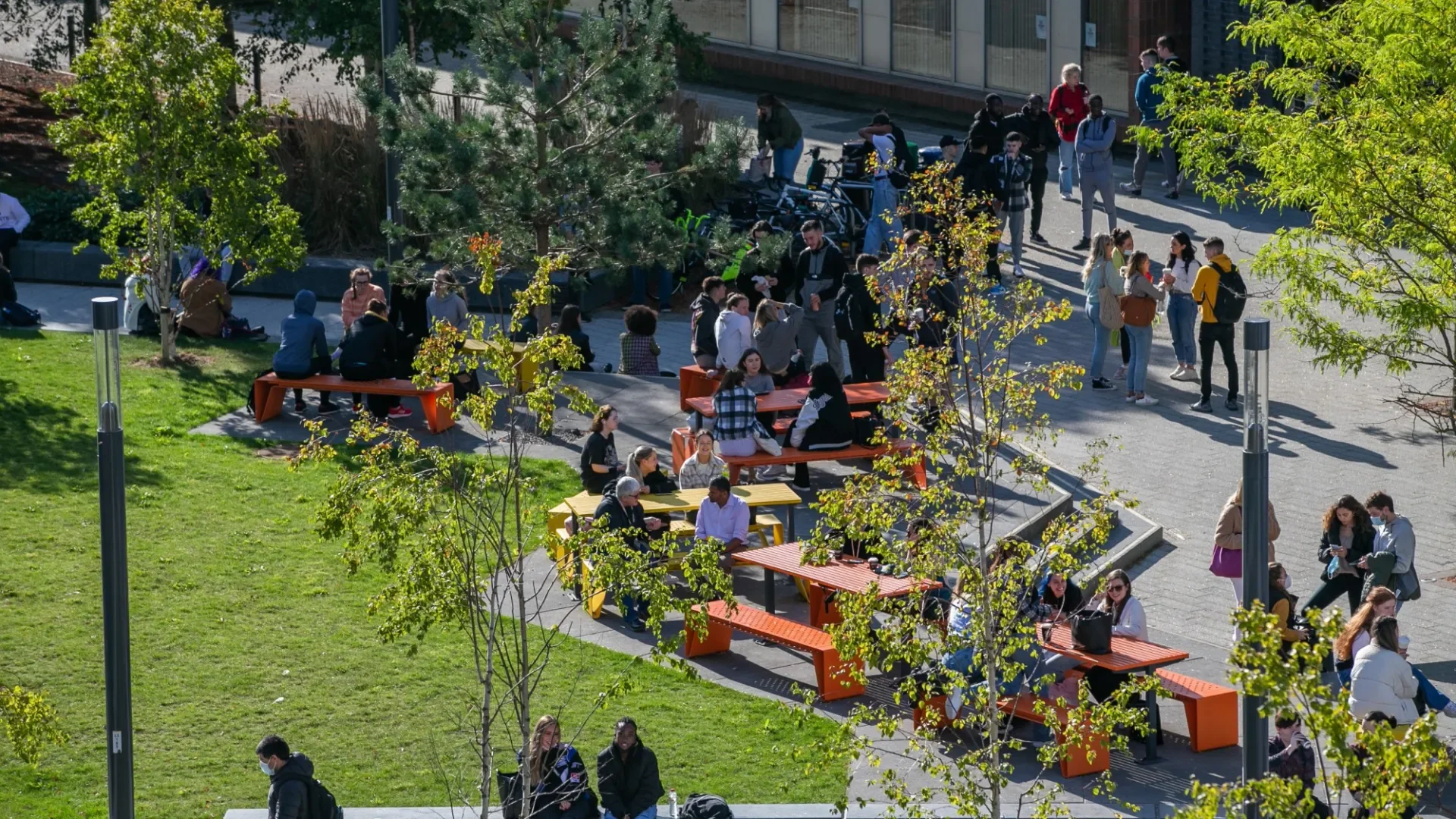
DCU Glasnevin Campus
FAQs

Do I need special equipment for this course?
SALIS has two newly refurbished language and translation laboratories for students to use. These laboratories have state-of-the-art tools and applications for language learning and translation practice.
I am good with languages and have an interest in training to be a translator - Do you have a degree that would work for me?
The BA in Applied Language and Translation Studies (ALTS) might be for you! It is a unique degree in Ireland that aims to prepare a new generation of translators and language professionals for the challenges and opportunities of the 21st century. You will study two foreign languages with combinations that include Chinese, French, German, Japanese and Spanish, as well as many stimulating modules on translation. It allows you to explore the principles behind language, culture, translation and intercultural communication, as well as learn about the latest technology used in translation work. This can be a three-year or four-year degree, as you have an opportunity of doing a year abroad in your third year. This will allow you to apply your language skills in a real life setting and is an excellent opportunity to experience the culture and society of a different country first-hand.
I love languages but will I need to do further study after my degree in order to get a job or am I equipped to go into the workplace? What sort of career can I pursue?
You will be equipped after the ALTS degree to be a language professional of various different types. For example, you may become a translator, localiser, editor, technical writer, project manager, language technologist, etc. If you want to become an interpreter, you will need to do a Master's in Interpreting. You will also have developed. transferrable skills that can be used in other occupations. For example, some of our graduates go into teaching, media, marketing, or work NGOs, banks, insurance companies, etc.
Is DCU all one campus?
DCU is a multi campus university - the Glasnevin, St Patrick's and All Hallows campuses. The St Patrick's campus is where the Education courses are taught and some of the subjects from the BA Joint Honours degree. There is a 20-25 minute walk between the campuses but there are buses and bikes available to go between them also.
Click here to see maps of all of our campuses
If I'm studying on the St Patrick's campus, can I use the library and sports centre on the Glasnevin campus?
Yes, all facilities such as sports and accommodation are open for all DCU students to avail of.
Are there libraries in DCU and if they have wifi and work stations?
We have a brand new state of the art four floor library on our St. Patrick's Campus which complements the existing library on the Glasnevin campus. There is free wifi, work stations as well as desktop computers.
Does DCU provide accommodation?
DCU does have on-campus accommodation for undergraduate and postgraduate students, and you can find out more and apply via the Accommodation Office webpage.
Have You Considered?