

Overview

This part-time programme gives you the skills and knowledge to develop your career, and a deep understanding of children’s learning and development in ECE.
Throughout the programme, you’ll learn how to critically examine your own practice and review current ECE debates. You’ll also explore how to help give children a voice and encourage their participation, as well as discover how to mentor and lead colleagues. Additionally, there will be a strong focus on understanding and undertaking quantitative and qualitative research.
Master your craft with renowned experts
National and international experts deliver the course modules online and on campus. You’ll also learn through engaging learning formats like video, interactive presentations, reflective questioning and group discussion.
Once you graduate, you’ll be equipped to enhance ECE practice or policy development. You’ll also be highly sought after for roles in early childhood agencies or committees, government organisations or departments, and educational management or consultancy.




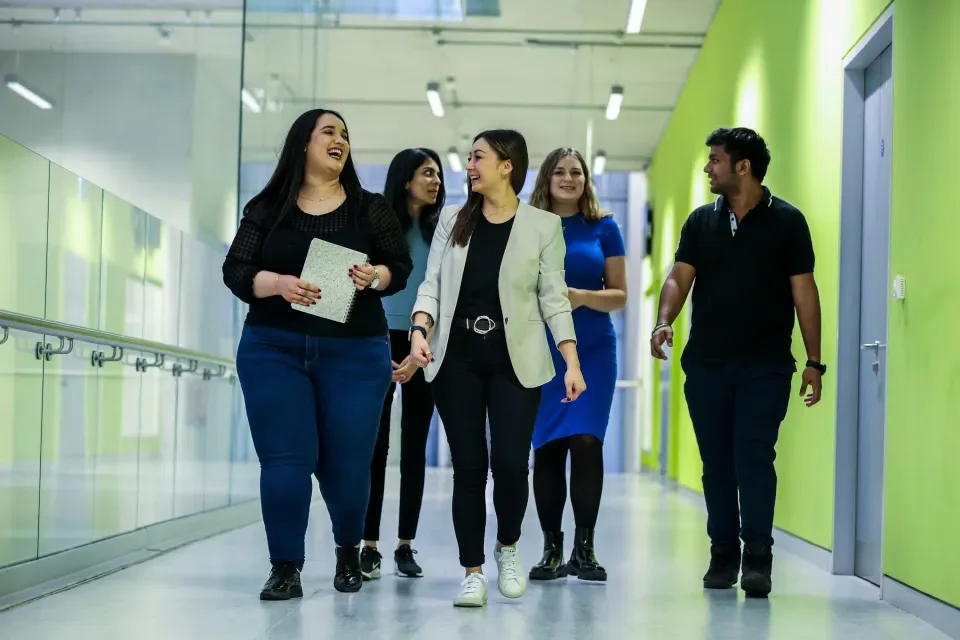
DCU People
Careers & Further Options

Careers
Graduates of the Master of Education in Early Childhood Education will be in position to lead research, policy and practice in early childhood education.
Career opportunities include;
- Leadership/Management roles in early years settings or primary schools
- Early years inspector (Department of Education or Tusla, the Child and Family Agency)
- Mentor/Trainer/Advisor for government agencies and organisations who support professional learning and development for early childhood educators and primary teachers
- Further studies and research at doctoral level
"DCU graduates are highly sought after by employers. Our Graduates work in environments ranging from large multinationals to SMEs, family businesses and start-ups across every sector.
DCU Careers Service has a number of learning and development initiatives in place for our students, giving them the skills they need for a successful career path."
Entry Requirements

The minimum entry requirement is a Level 8 award with a minimum of a H2.2.
In general, applicants will have degrees in education, early childhood education or studies, education and training, or other related and cognate fields, and two years’ experience in setting(s) supporting children from birth to six years, which may be post or prior to their Level 8 award.
Due to the specialist nature of this programme, additional criteria may be used to assess suitability to undertake this programme. For further information, please contact the Programme Chair using the contact details above
Recognition of prior learning/transfer/exemption procedures apply.
Students on the programme will need to have access to an early childhood setting or an Infant classroom.
Programme Structure

The Master of Education in Early Childhood Education is a two-year, part time, taught programme delivered on campus and online (blended).
Online lectures normally take place on Tuesday evenings with some on campus lectures on Thursday evenings/Saturdays between September-November in Semester 1 and January-April in Semester 2. Please contact Programme Chair for further information about the Programme calendar.
Programme orientation will take place on a Saturday in early-September on the DCU St Patrick’s campus in Drumcondra.
The programme aims to develop graduates who will:
- Extend their knowledge, skill and expertise to enhance early educational experiences for children in the range of early childhood education and related contexts (birth to 6 years), through critical reflection and interrogation of one’s own values and practice
- Adopt a critical stance in examining current discourses and critically interrogate ubiquitous concepts, grand narratives, emerging trends and perceived certainties that have come to dominate the early childhood field, both nationally and internationally
- Engage in cross-sectoral dialogue, cooperation and collaboration across early childhood education and related professional contexts to build professional networks
- Conduct ethical research in a specialised area in early childhood education that will contribute to professional practice and advance academic knowledge and evidence-informed approaches to the improvement of early childhood education
- Explore opportunities for educational leadership, mentoring, academic advocacy, career progression and professional development within early childhood education
In Year 1, students undertake five modules:
- Curriculum and Pedagogy in Early Childhood Education (blended)
- Leading and Mentoring for Professional Practice (online)
- Children's Participation in Early Childhood Education and Care (blended)
- Qualitative Research Methods (online)
- Quantitative Research Methods (online)
Students undertake a sixth module Contesting Current Discourses in Early Childhood Education and Care (on campus) in the form of a study week in July/August; and complete a thesis with the support of a supervising tutor.
Fees and Funding

Fees
How To Apply

To apply for this programme
- All Applicants must apply through DCU's Student Application Portal which is available here. Here's a quick step by step guide if you need help with your application.
Applications must include
- Certified academic transcripts for each and every year of study, with certified English translations if applicable
- A CV highlighting relevant professional experience, including at least two years in the area of early childhood education
- Personal statement of 500 words maximum outlining reasons for applying for the programme and indicating area of research interest
Non Native English Speakers - Additional
- Evidence of English competency which meets DCU entry requirements
Non-EU applicants
- If you require a study visa and are a Non EU student, you are not eligible to apply for part-time programmes as study visas are only granted for full-time programmes.
Application dates
Applications open date: 01/01/2024
Applications will be accepted and places offered on a rolling basis until the programme registration quota is full or until the following dates:
- Non EU Applicants - 21st June 2024
- EU Applicants - 20th August 2024
All entry requirements should be met before the commencement of the programme.
Application Queries
For EU applicant queries, please visit https://www.dcu.ie/registry/eu-postgraduate-taught-admissions or email postgraduateadmissions@dcu.ie
Queries specific to the Master of Education in Early Childhood Education programme can be directed to Programme Chairs: Geraldine French (geraldine.french@dcu.ie) or Fiona Giblin (fiona.giblin@dcu.ie)
Commencement of Programme
This programme will commence in September 2024*.
*Subject to minimum student registrations.
Life On Campus

At DCU, our students can expect a unique campus experience. We are known for our excellent teaching and learning facilities, our active clubs and societies, and our great social and sporting facilities. All this makes DCU an exciting place to be.
DCU has three academic campuses; Glasnevin, St. Patrick’s and All Hallows (both in Drumcondra), all close to Dublin City centre.
They can be reached by public transport, Dublin Bus and Bus Éireann, with our Drumcondra campuses a ten minute walk from Drumcondra Train Station. Glasnevin is a 20 minute walk from St Patrick’s and All Hallows. They are also linked by Dublin Bus.
Each campus has a library (O’Reilly, Cregan and Woodlock Hall), study spaces, restaurants, and on-campus residencies. There are sports facilities on Glasnevin and St. Patrick’s, and there is a dedicated sports campus, St Claire’s, located near Glasnevin on the Ballymun Road.
DCU’s 19,000 students have access to exceptional teaching and learning facilities across our three academic campuses.
These include modern learning theatres, research centres, a new media and TV studio, radio/podcast studios, computer suites and advanced labs in the areas of Languages, Engineering, Physics, Chemistry and Biotechnology, as well as a Sports Performance centre and a training hospital ward. In 2021, we opened our first virtual reality ‘Leadership Lab’, which is located in our Business School.
We continue to improve and update our facilities. For example, construction of a new world-class STEM facility is underway on the Glasnevin campus. With capacity for an extra 3,000 STEM students, this facility will advance DCU’s international reputation for excellence in science and health, computing and engineering disciplines.
Studying in DCU isn’t just about course work. The university is rich in student life and activities.
There are more than 140 clubs and societies for students in DCU, with ‘Clubs & Socs’ days taking place on both the Glasnevin and Drumcondra campuses at the start of the academic year. They span everything from rugby to rock climbing, anime to jazz.
For many students, sport is an important part of the DCU experience. DCU’s Sports Complex boasts a 25 metre swimming pool, fitness centre gym, all-weather pitches and squash courts, as well as soccer, GAA and rugby pitches. DCU Dóchas Éireann, the university’s GAA club, is the largest third level Gaelic Games club in the country. Meanwhile, DCU Athletics has been Ireland’s highest achieving university club for many years. And DCU has dozens of other clubs to get involved in, from Archery to Weightlifting.
The Glasnevin campus is home to our purpose built, state-of-the-art student centre, The U, which serves the needs of a rapidly growing student body. Here, you will find the Student Leadership and Lifeskills Centre, performing arts and cultural spaces for students and the wider community, and the Entrepreneurship and Innovation Hub. Also located on our Glasnevin campus is The Helix, our renowned performing arts centre.
On our St Patrick’s campus, we have the Java Student Hub, a vibrant, warm and welcoming space where students can meet for coffee, play music, use the projector to watch events, or just relax. The walls of the Java Hub were designed based on the cultural history of St Patrick’s Campus, including the special references to the notable sporting history and history of the arts.
We have a number of academic, professional and social supports for students.
Student Advice & Learning Skills Centre - Offers a wide range of supports and services to students and advice
The Writing Centre - drop-in writing workshops for students through the academic year
Maths Learning Centre - provides maths support for students of all ability levels with maths modules
Student Learning - facilitate the transition from passive to active learning for students at DCU, by teaching study skills, nurturing critical thinking and building student confidence.
Careers work with students to help them on their professional journey into graduate employment.
Our student support team offers a comprehensive support programme, helping students make that all important transition into university life and focusing on building confidence and skills which are key to success at third level.
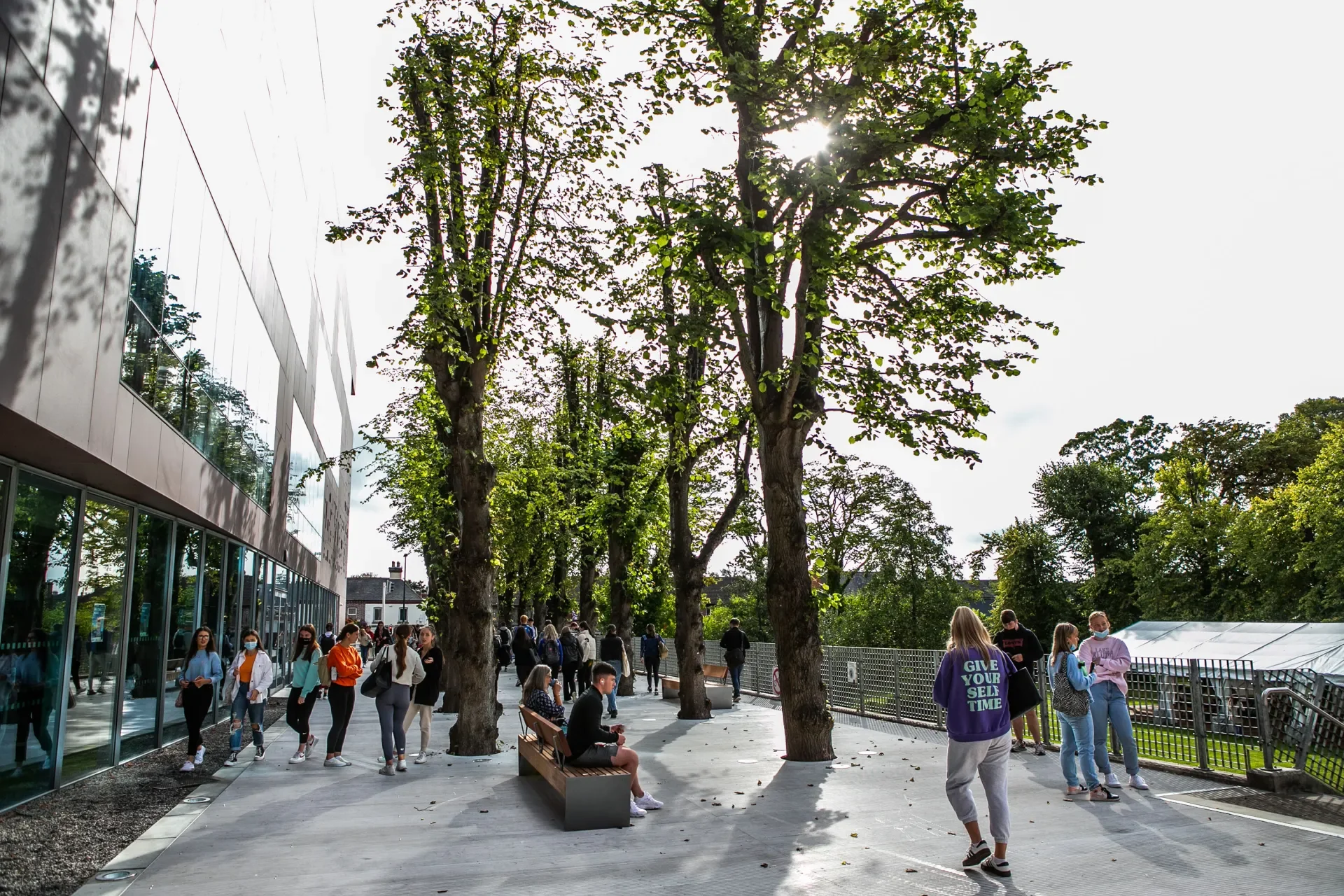
DCU St Patrick's Campus
FAQs

What courses are offered by the DCU Institute of Education?
DCU Institute of Education brings together students of education and provides a rich menu of undergraduate courses across all sectors from early childhood, to primary and post-primary and further and higher education. We offer a range of taught and research postgraduate courses at doctoral, masters, diploma and certificate level and have a distinguished record in providing continuing professional development.
Is there Garda vetting for students who study DCU Institute of Education courses?
Garda vetting is required for all students who have unsupervised access to children and vulnerable adults as part of their studies at DCU. Applicants must successfully pass the Garda vetting process in order to complete the registration process.
What are the potential teaching pathways for primary, post-primary and further education and training offered by DCU?
Primary Teaching Pathways
Undergraduate*
Postgraduate**
- Professional Master of Education (Primary Teaching) - DC970
* Please ensure that you consult minimum entry requirements and CAO points for all undergraduate programmes
** Please ensure that you consult minimum entry requirements for all postgraduate programmes
Post-Primary Teaching Pathways
Undergraduate*
- Bachelor of Religious Education & English or History or Music - DC010 | DC011 | DC012
- Bachelor of Education in Gaeilge and French or German or Spanish - DC013
- Bachelor of Education in Technology, Engineering and Graphics - DC015
- Bachelor of Science (Hons) in Science Education - DC203
- Bachelor of Science (Hons) in Physical Education with Biology - DC205
- Bachelor of Science in Physical Education with Mathematics - DC206
Postgraduate**
- Professional Master of Education (Post-Primary Teaching) - DC905
* Please ensure that you consult minimum entry requirements and CAO points for all undergraduate programmes
** Please ensure that you consult minimum entry requirements for all postgraduate programmes
Further Education and Training Teaching Pathways
Undergraduate*
- BSc (Hons) in Education and Training (Further, Adult and Continuing Education) - DC235
* Please ensure that you consult minimum entry requirements and CAO points for all undergraduate programmes