

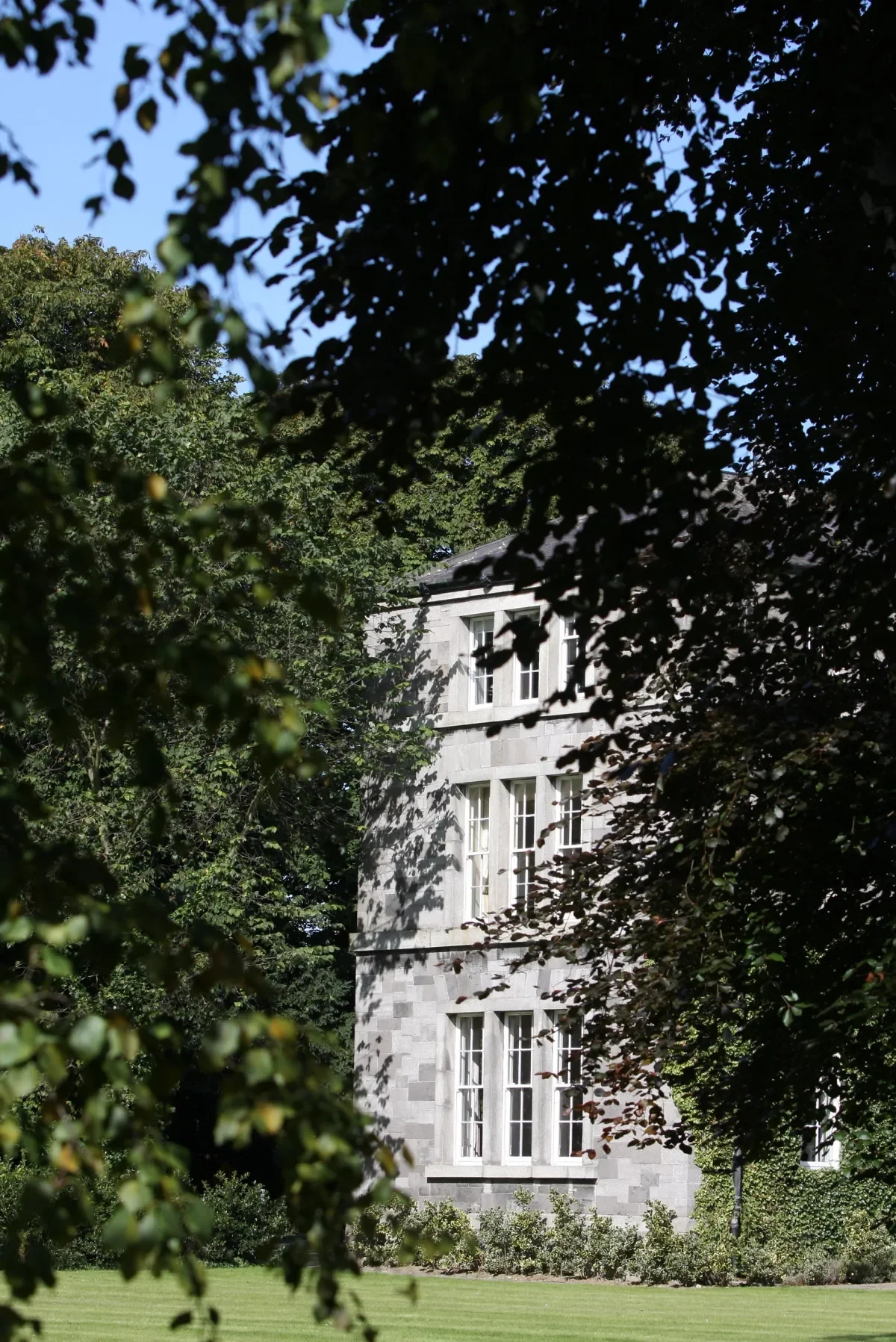
Biodiversity Action Plan
Biodiversity is the critical foundation of the Earth’s life support system, on which the welfare of current and future generations depends, according to the global Convention on Biological Diversity.
DCU is committed to protecting biodiversity and embedding this protection into all aspects of our decision-making including:
- building and grounds management
- public realm spaces
- the construction of new buildings.
Read the detailed plan or discover key highlights below.
Habitats for pollinators
To provide habitats where pollinators can survive and thrive, DCU will:
- mow and collect clippings less often
- introduce artificial solitary bee nests and bird boxes
- introduce and maintain a wildflower meadow.
Landscape management
To maintain and enhance biodiversity DCU will:
- prioritise native plants in new planting schemes (at least 75% of plants to be pollinator-friendly)
- reduce hedge cutting, and cut between November and January
- keep fertilisers, pesticides and herbicides well away from trees, hedges and verges
- identify at least 10 locations that are mown under a pollinator-friendly regime (5 cut and lifts per year after April 15)
- identify at least four areas to be converted to perennial planted borders.
Dublin City Council’s Climate Action Plan
DCU will work with DCC and other local stakeholders such as Drumcondra Tidy Towns and local residents’ associations to assess the feasibility of further green walls and potential for wetland, and will seek to create and promote a DCU Tree Trail.
DCU also aims to identify and monitor all medium- and high-impact invasive plant species and remove them where feasible, in line with the Dublin City Council (DCC) Climate Action Plan.
Biodiversity team
DCU will build a biodiversity team with student, academic and other staff representatives. This team will:
- log existing and new ‘Actions for Pollinators’ on the mapping system (pollinators.ie)
- promote these across all campuses
- provide or facilitate training on biodiversity and how to take action to protect it.