

DCU and the UN Sustainable Development Goals
What are the SDGs?
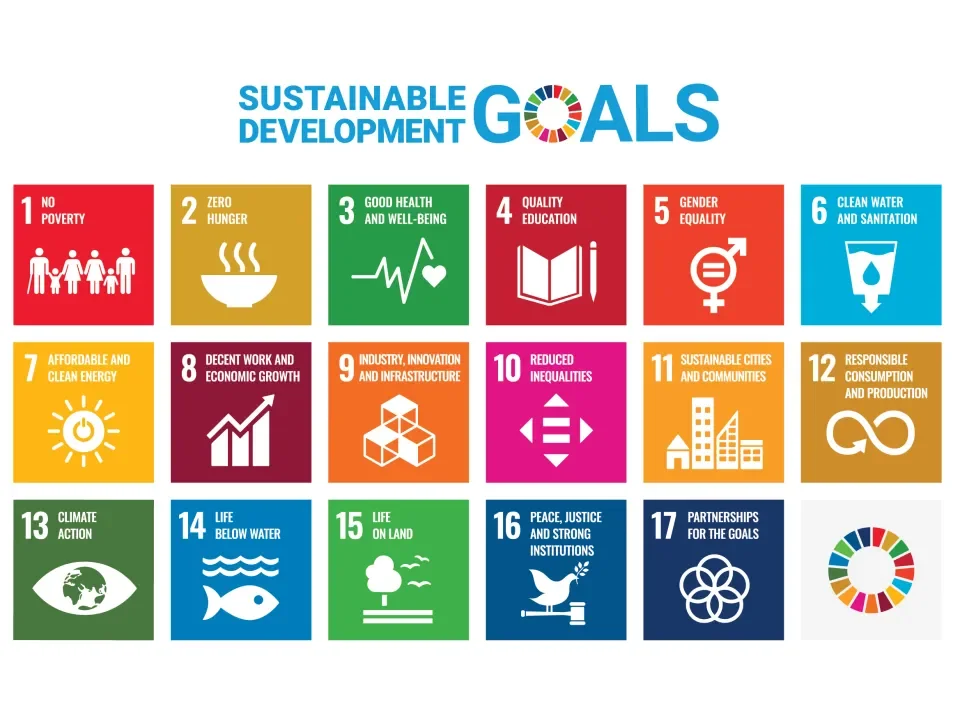
In an ambitious effort to end poverty, protect the planet, and promote peace and prosperity, the United Nations adopted its Sustainable Development Goals (SDGs) in 2015.
The 17 goals are integrated and interconnected. Poverty, discrimination and exclusion cannot be tackled without improving global health, education and economic growth. And all of these goals must be addressed in the context of climate change and the urgent need to protect our planet’s natural environments and ecosystems.
Achieving social, economic and environmental sustainability will require global cooperation and determination. At DCU, we always strive to ensure we work, study and live in ways that account for the SDGs.
DCU ranks highly in work towards the SDGs
Our efforts have been recognised by the Times Higher Education Impact Rankings 2024, which assess universities around the world according to their work toward the SDGs.
- In the top 200 overall out of 1,963 institutions
- In the top 200 for three specific goals: SDG 5 (Gender Equality), 12 (Responsible Consumption and Production) and 16 (Peace, Justice and Strong Institutions)
- 24th place for SDG 2 (No Poverty)
- In the top 100 for SDG 10 (Reduced Inequalities)
Discover some of the ways DCU continually acts on our commitment to the SDGs below

No Poverty
End poverty in all its forms everywhere
DCU takes a comprehensive approach to widening participation in higher education, led the way as Ireland’s first University of Sanctuary and holds a long-standing commitment to eradicating poverty through community engagement.
Through a combination of access programmes, financial support, community engagement, and innovative initiatives, DCU is making a tangible impact on the lives of its students and the broader community.
1. Widening Participation and Access Programmes
DCU’s Widening Participation initiative aims to increase access to higher education for underrepresented groups. The Access Programme is a cornerstone of this effort, providing financial, academic, and personal support to students from disadvantaged backgrounds.
2. The Pantry
The Pantry is a student-led initiative that provides free food and essential items to students in need. This service helps alleviate food insecurity among the student population, ensuring that all students have access to nutritious meals2.
3. Student Assistance Fund
DCU offers a Student Assistance Fund to provide financial support to students experiencing financial difficulties. This fund helps cover essential costs such as rent, utilities, and academic expenses, ensuring that financial barriers do not hinder students’ educational pursuits3.
4. University of Sanctuary Scholarships
DCU, Ireland’s first University of Sanctuary, offers scholarships to asylum seekers and refugees. These scholarships provide access to higher education for individuals who have been displaced, promoting social inclusion and economic empowerment.
5. Alumni Mentorship Programmes
DCU’s Alumni Mentorship Programmes connect current students with alumni mentors who provide guidance, support, and networking opportunities. These programmes help students navigate their academic and professional journeys, enhancing their prospects for future success.
6. Support for Start-ups and Incubation
DCU Invent offers a range of supports to entrepreneurs and start-ups, including incubation space, mentoring, and access to funding. This initiative fosters innovation and economic development, creating opportunities for individuals to lift themselves out of poverty through entrepreneurship.
7. Civic Engagement and Community Programme
DCU’s 16-week education and fitness programme is an example of its commitment to community engagement. This programme provides educational and fitness opportunities to local communities, promoting well-being and social cohesion.
8. Changemaker Schools Network
The DCU Changemaker Schools Network supports schools in developing innovative approaches to education that foster social responsibility and community engagement. This network empowers young people to become active citizens and contribute to poverty reduction efforts.
9. Global Village and Citizenship Education
DCU’s Global Village initiative and its focus on global citizenship education promote values of inclusivity, diversity, and social justice. These programmes encourage students to engage with global issues, including poverty, and to take action towards creating a more equitable world.

Zero Hunger
End hunger, achieve food security and improved nutrition and promote sustainable agriculture
DCU participates in Food for Health Ireland, a multidisciplinary research centre that addresses some of today's most pressing global health issues through innovation in food
Health and Wellbeing
Ensure healthy lives and promote wellbeing for all at all ages
DCU takes a whole-campus approach to health and wellbeing through the DCU Healthy initiative, and our Health Technologies and the Healthy and Ageing Society priority area integrates biomedical research with technology and social sciences for innovative solutions to health problems
Quality Education
Ensure inclusive and equitable quality education and promote lifelong learning opportunities for all
DCU is committed to the widest possible access to higher education through DCU in the Community and as a Age-Friendly University, while the DCU Educational Disadvantage Centre works to break the cycle of socio-economic and educational exclusion
Gender Equality
Achieve gender equality and empower all women and girls
DCU takes pride in our ongoing progress in addressing gender inequality in senior academic positions, our Women in Leadership initiatives, and the impact of our research in the area of gender equality.
The University has demonstrated a strong commitment to achieving Sustainable Development Goal 5 (SDG5) - Gender Equality through various initiatives and policies that contribute to promoting gender equality within the university community.
1. Widening Participation and Access Programme
DCU’s Widening Participation initiative and Access Programme aim to increase access to higher education for underrepresented groups, including women. These programmes provide financial, academic, and personal support to ensure that all students, regardless of gender, have the opportunity to succeed in their studies1.
2. Post-Entry Supports
DCU offers extensive post-entry supports to ensure that students from diverse backgrounds, including women, receive the necessary assistance to thrive academically and personally. These supports include mentoring, academic advising, and financial aid.
3. Women in STEM Initiatives
DCU has partnered with Fidelity Investments Ireland to establish a new scholarship fund aimed at supporting women in STEM fields. This initiative seeks to address the gender imbalance in STEM by providing financial support and encouraging more women to pursue careers in these areas.
4. Women in Computer Science Summit
DCU hosts events such as MongoDB’s Women in Computer Science Summit, which provides a platform for women in technology to network, share experiences, and gain insights from industry leaders. These events are crucial for fostering a supportive community for women in tech.
5. Dignity and Respect Policies
DCU has implemented comprehensive policies to ensure a respectful and inclusive environment for all students and staff. The Dignity and Respect Policy outlines the university’s commitment to preventing harassment and discrimination, promoting a culture of respect and equality.
6. Gender Identity and Expression Policy
DCU’s Student Gender Identity and Gender Expression Policy supports students in expressing their gender identity freely and safely. This policy is part of the university’s broader efforts to create an inclusive environment for all gender identities.
7. Maternity and Paternity Leave Policies
DCU provides robust maternity and paternity leave policies to support staff in balancing their professional and personal responsibilities. These policies ensure that both parents have the opportunity to take leave and care for their children, promoting gender equality in the workplace.
8. Athena SWAN Silver Action Plan
DCU’s commitment to gender equality is further evidenced by its Athena SWAN Silver Action Plan. This plan outlines specific actions to promote gender equality in academia, including initiatives to support women’s career progression and address gender imbalances in senior positions.
Clean Water & Sanitation
Ensure availability and sustainable management of water and sanitation for all
The DCU Water Institute tackles national, international and global water resource problems through research, education and innovation, providing informed leadership decisions for sustainable action.
DCU is committed to ensuring clean water and sanitation for all. Through research, innovation, community engagement, and sustainable practices, the university is making significant strides in promoting water sustainability and management.
1. DCU Water Institute
The DCU Water Institute plays a pivotal role in advancing water research and innovation. The institute’s strategy report for 2022-2025 outlines its commitment to addressing water quality, water management, and sustainable water use. The institute collaborates with industry and government bodies to develop innovative solutions for water-related challenges.
2. Sustainability and Climate Action Plans
DCU’s Sustainability Report for 2023-2024 and the Climate Action Plan for 2021-2026 demonstrate the university’s dedication to environmental sustainability. These plans include measures to improve water efficiency, reduce water waste, and promote sustainable water practices across the campus.
3. Citizen Science and Community Empowerment
DCU emphasizes the importance of citizen science and community engagement in addressing water issues. Initiatives such as the Citizen Science and Community Empowerment programme encourage local communities to participate in water monitoring and conservation efforts.
4. Public Engagement Programmes
DCU actively participates in public engagement programmes, such as the IGC 2024 Public Engagement Programme, which focuses on raising awareness about water sustainability and encouraging public involvement in water conservation initiatives.
5. Biodiversity and Ecosystem Protection
The DCU Biodiversity Plan outlines strategies to protect and enhance local ecosystems, which are crucial for maintaining water quality and biodiversity. The plan includes actions to preserve natural habitats and promote sustainable land and water use practices.
6. Smart Dublin Collaboration
DCU’s collaboration with Smart Dublin and other local authorities has secured major project funding for innovative water management solutions. This partnership aims to implement smart technologies for efficient water use and management in urban areas.
7. Water Safety and Management Policies
DCU’s Framework Safety Statement and other related policies ensure that water safety and management practices are in place to protect the health and well-being of the university community. These policies include guidelines for safe water use, emergency response, and risk management.
Conclusion
DCU’s comprehensive approach to addressing SDG6 demonstrates its
Affordable and Clean Energy
Ensure access to affordable, reliable, sustainable and modern energy for all
DCU maintains strong links to the Sustainable Energy Authority of Ireland (SEAI), including as a member of the Better Energy Communities Network. Learn more about being energy-smart at DCU
Decent Work & Economic Growth
Promote sustained, inclusive and sustainable economic growth, full and productive employment and decent work for all
The DCU National Centre for Family Business translates leading Irish and International research into best practice for the present and future generations of Irish family businesses.
DCU has made notable progress in addressing Sustainable Development Goal 8 (SDG8) - Decent Work and Economic Growth through various initiatives and policies that contribute to promoting sustained, inclusive, and sustainable economic growth, full and productive employment, and decent work for all.
1. Payroll and Pay Scales
DCU maintains transparent payroll and pay scales to ensure fair compensation for all employees. This transparency helps promote equity and fairness in the workplace, contributing to decent work conditions.
2. Union Recognition and Membership Policy
DCU’s Union Recognition and Membership Policy supports the rights of employees to join and participate in trade unions. This policy fosters a collaborative and supportive work environment, ensuring that employees have a voice in workplace matters.
3. Dignity and Respect Policy
The Dignity and Respect Policy at DCU outlines the university’s commitment to creating a respectful and inclusive environment for all staff and students. This policy maintains a workplace where everyone is valued and respected.
4. Pay Determination Summary Statement
The Pay Determination Summary Statement provides clarity on how pay is determined at DCU. This document ensures that the process is transparent and based on objective criteria, promoting fairness and equity in compensation.
5. Gender Pay Gap Report
DCU’s Gender Pay Gap Report for 2023 highlights the university’s efforts to address gender disparities in pay. The report provides data on the gender pay gap and outlines actions being taken to reduce it, demonstrating DCU’s commitment to gender equality in the workplace.
6. Statute 4 COO
Statute 4 COO outlines the roles and responsibilities of the Chief Operating Officer at DCU. This statute ensures that leadership roles are clearly defined and that there is accountability in the management of the university.
Industry, Innovation and Infrastructure
Build resilient infrastructure, promote inclusive and sustainable industrialization and foster innovation
As the home of the National Centre for Plasma Science and Technology, and an academic partner of the Irish Photonic Integration Centre, DCU is at the leading edge of research into sustainable and renewable energy
Reduce Inequalities
Reduce inequality within and among countries
DCU’s leadership in reducing inequality is reflected in the diversity of our student body, our pioneering work as the world’s first autism-friendly university and the establishment of the DCU Centre of Excellence for Diversity and Inclusion
The University has various initiatives and policies that contribute to reducing inequalities within the university community and beyond.
1. Admissions Principles and Widening Participation
DCU’s Admissions Principles and Widening Participation initiatives aim to increase access to higher education for underrepresented groups. These programmes ensure that students from diverse backgrounds have the opportunity to pursue higher education, thereby reducing educational inequalities.
2. Access Programme
The Access Programme provides financial, academic, and personal support to students from disadvantaged backgrounds. This programme is crucial in levelling the playing field and ensuring that all students have the resources they need to succeed.
3. Dignity and Respect Policy
DCU’s Dignity and Respect at Work and Study Policy outlines the university’s commitment to providing an inclusive and respectful environment for all members of the university community. This comprehensive anti-discrimination policy covers all aspects of the institution’s operations, promoting equality and respect.
4. Equality, Diversity, and Inclusion Committee
The Equality, Diversity, and Inclusion Committee plays a vital role in promoting and monitoring equality and diversity within the university. The committee’s terms of reference include developing policies and initiatives to support an inclusive environment.
5. Civic Engagement and Student Involvement
DCU encourages civic engagement and student involvement through various programmes and initiatives. These efforts help students develop a sense of social responsibility and contribute to reducing inequalities in the broader community.
6. Support for Students with Disabilities
DCU is committed to ensuring equality of opportunity for students with disabilities. The university has several measures in place, including policies and procedures, to support students with disabilities and ensure they have access to the necessary resources and accommodations.
7. Disability Learning Support Service
The Disability Learning Support Service provides tailored support to students with disabilities, ensuring they can fully participate in their academic programmes. This service is part of the university’s broader commitment to inclusivity and equal opportunity.
8. Anti-Bullying and Anti-Discrimination Policies
DCU has implemented robust policies to prevent bullying, harassment, and discrimination. These policies are designed to create a safe and supportive environment for all students and staff, furthering the university’s commitment to reducing inequalities.
Sustainable Cities and Communities
Make cities and human settlements inclusive, safe, resilient and sustainable
The DCU Entwine Centre’s mission is to provide a networked platform with a global reach to make possible an energy-efficient Internet of Things at the scale required by a smart city.
Responsible Consumption and Production
Ensure sustainable consumption and production patterns
DCU was the first Irish university to feature a plastic-free initiative in its sustainability plans, and our procurement policies take care to consider the sustainability of our consumption

Climate Action
Take urgent action to combat climate change and its impacts
DCU’s MSc in Climate Change: Policy, Media and Society provides leaders with an understanding of the climate regulatory landscape and the wider environment in which change must be achieved.
UN SDG 14 - Life Below Water
Conserve and sustainably use the oceans, seas and marine resources for sustainable development
DCU’s cross-faculty initiative of research and education on water, the DCU Water Institute, holds the promotion of healthy aquatic ecosystems as one of its central goals
Life on Land
Protect, restore and promote sustainable use of terrestrial ecosystems, sustainably manage forests, combat desertification, and halt and reverse land degradation and halt biodiversity loss
The DCU Biodiversity Plan will outline DCU's embedding of biodiversity protection into decision-making across all sectors of the University
Peace, Justice and Strong Institutions
Promote peaceful and inclusive societies for sustainable development, provide access to justice for all and build effective, accountable and inclusive institutions at all levels
The DCU Institute for International Conflict Resolution and Reconstruction provides analysis, research and expertise on conflict and peacebuilding around the world
DCU’s comprehensive approach to promoting peace, justice, and strong institutions demonstrates its dedication to SDG16. Through robust governance, student engagement, support services, academic integrity, and community involvement, DCU is working towards creating a just and inclusive environment for all.
1. Governance and Institutional Framework
DCU has a robust governance structure to ensure transparency and accountability. The university’s governance framework includes the Governing Authority, which oversees the strategic direction and management of the university. This structure ensures that decision-making processes are inclusive and representative of the university community.
2. Student Union and Civic Engagement
The DCU Students’ Union plays a crucial role in representing the interests of students and promoting their involvement in university governance. The union provides a platform for students to voice their concerns and participate in decision-making processes. Additionally, DCU’s civic engagement initiatives encourage students to engage with local communities and contribute to social justice efforts.
3. The Pantry and Student Support Services
The Pantry is a student-led initiative that provides free food and essential items to students in need. This service helps alleviate food insecurity and supports the well-being of the student community. DCU also offers various support services, including clubs and societies, to foster a sense of community and inclusion among students.
4. Academic Freedom and Research Integrity
DCU upholds the principles of academic freedom and research integrity through its policies and practices. The university’s Code of Good Research Practice and the Academic Freedom Policy ensure that research is conducted ethically and that academic staff have the freedom to pursue their scholarly interests without undue interference.
5. Equality, Diversity, and Inclusion
DCU is committed to promoting equality, diversity, and inclusion within its community. The Dignity and Respect at Work and Study Policy outlines the university’s commitment to creating a respectful and inclusive environment for all members. The Equality, Diversity, and Inclusion Committee develops and monitors policies to support these values.
6. Financial Transparency
DCU maintains financial transparency through the publication of its consolidated financial statements. These statements provide a clear overview of the university’s financial health and ensure accountability in the management of resources.
7. Community and Public Engagement
DCU actively engages with the broader community through various initiatives. The university’s involvement in the Just Transition Planning Process and the launch of the Health Literacy Report are examples of its commitment to addressing societal challenges and promoting public well-being.
Partnerships for the Goals
Strengthen the means of implementation and revitalize the Global Partnership for Sustainable Development
DCU collaborates with all our stakeholders and partners working to transform lives and society for a better, fairer and more sustainable world. DCU coordinates RCE Dublin, a United Nations Regional Centre of Expertise in Education for Sustainable Development.